Same Search, Different Casino: How Your ZIP Code Decides What's Behind Every 'Best Casino' Link
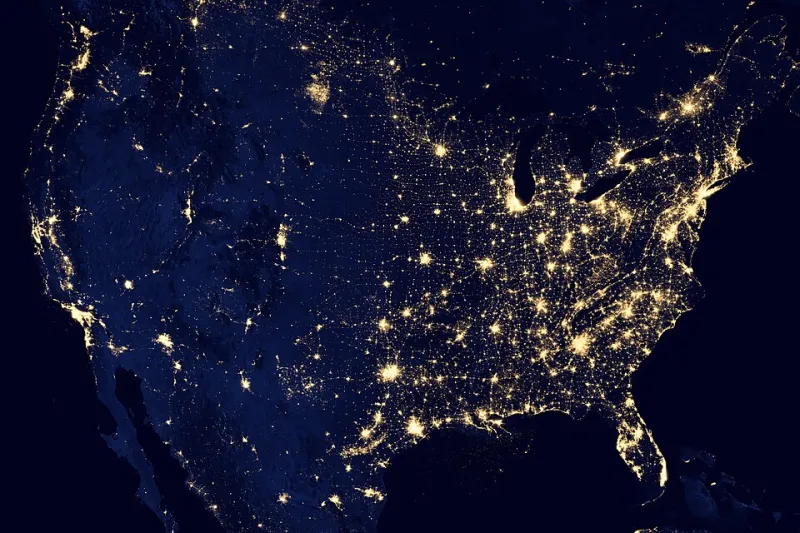
Photo: NASA Earth Observatory, Public domain, via Wikimedia Commons
A reader wrote to us last month with a puzzle: he and his brother-in-law clicked the same link from the same site and ended up at two completely different casinos. One got a licensed New Jersey operator. The other got an offshore site he'd never heard of, offering a bonus three times bigger.
Neither link was "broken." The difference was their ZIP codes. If you've never thought about how geo-targeting shapes what casinos get served to you, this one's worth five minutes of your time — because it's also about your legal protection as a player.
Why the Same Link Serves Different Destinations
Casino link hubs and affiliate sites have two problems to solve at once. First, online gambling legality in the US is a state-by-state patchwork: real-money online casinos are fully legal and regulated in only a handful of states (think New Jersey, Michigan, Pennsylvania, West Virginia, Connecticut, Rhode Island, Delaware), while sports betting is legal in far more of them. Second, hubs earn affiliate commissions, and they want to send every click somewhere that can actually accept the player.
So many hubs use geo-detection — your IP address — to route traffic. Click from Trenton, you get the Garden State's licensed brands. Click from a state without legal online casinos, the hub has a choice: show you nothing useful, show you legal sportsbooks, or quietly route you to an offshore operation that will take your money regardless of where you live.
Guess which option pays the hub the most.
The Protection Gap Nobody Mentions
Here's what's actually at stake. Play at a state-licensed casino and you have real recourse: a regulator you can file complaints with, mandated game auditing, segregated player funds, and self-exclusion tools with teeth. Play at an offshore site from a state where it's not licensed, and you have none of that. If the site refuses your withdrawal, your state's attorney general can't help you, and neither can the offshore operator's "licensing authority," which exists mostly as a logo on a footer.
The brother-in-law in our reader's story wasn't just getting a smaller selection — he was getting a worse deal with zero safety net, dressed up as a bigger bonus.
How to Verify Any Casino Behind Any Link
Thirty seconds of diligence closes this gap:
- Scroll to the footer. A legitimate US-facing operator lists its licensing authority and license number — e.g., "Licensed by the New Jersey Division of Gaming Enforcement." No license info at all is your answer.
- Cross-check with your state regulator. Most state gaming commissions publish approved operator lists. New Jersey, Michigan, and Pennsylvania all make this easy. If the brand isn't on the list, it doesn't matter what the link hub claimed.
- Check the geolocation prompt. Licensed US casinos verify your physical location at login and even during play. If a site happily takes your deposit with no location check from a non-legal state, that's a red flag, not a convenience.
- Look at the payment methods. Licensed operators work with mainstream US banking — Visa, PayPal, online banking via trustly-style services. Offshore sites lean on crypto and wire transfers because traditional processors won't touch them.
What to Expect From a Good Link Hub
A hub doing right by you tells you which states each linked casino serves, up front, before you click. It doesn't route players in non-legal states to offshore sites as a fallback. And it's honest that your options depend on where you live — even when that honesty makes the pitch less exciting.
The internet feels borderless, but American gambling law isn't. The next time a "best casino" link serves you something different than expected, don't just shrug and play — check who's licensed where you stand.